Plaster Crack Repair
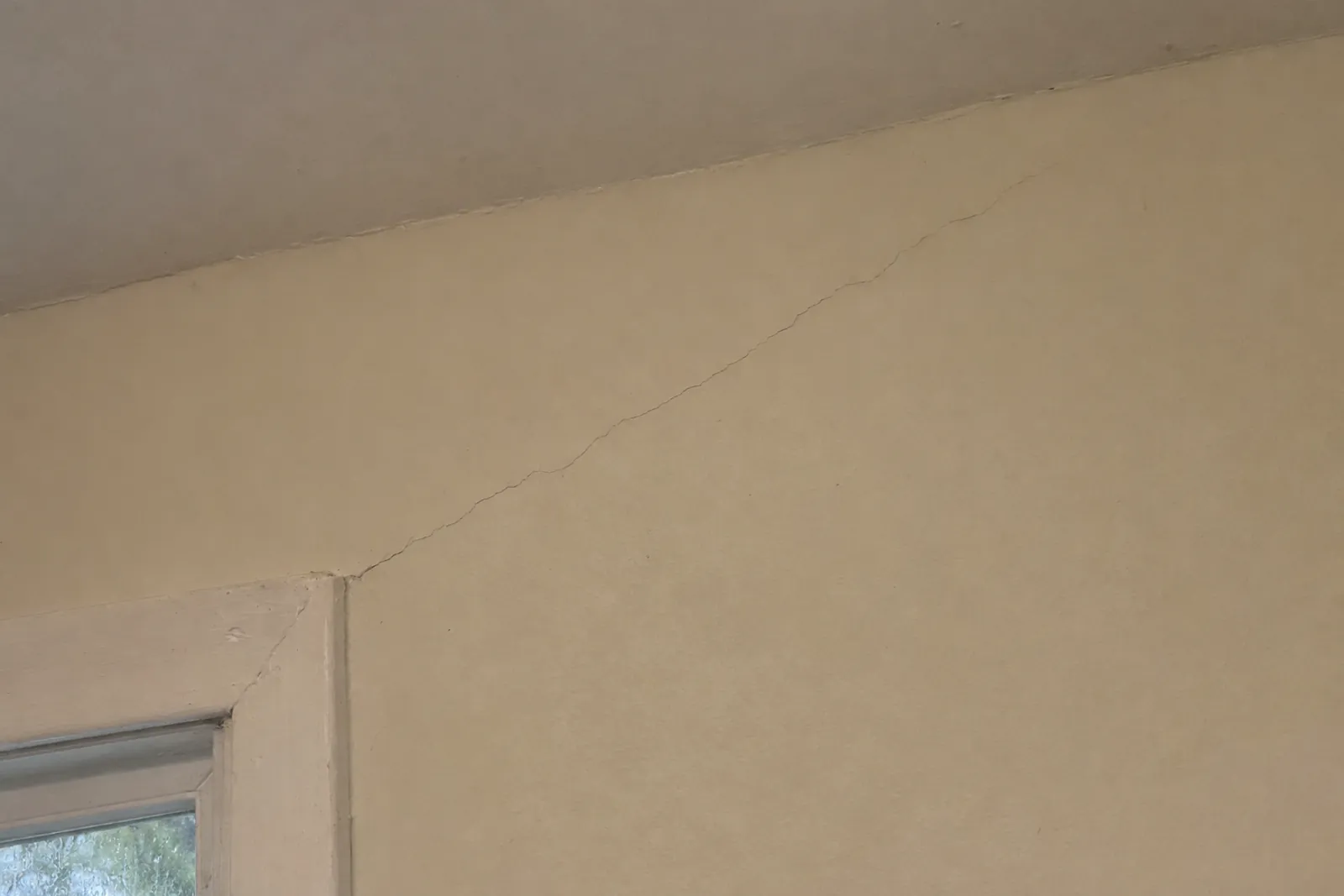
Cracks at door corners, along ceilings and where old plaster meets newer board, taped and rebuilt to hold through a Michigan winter.
Cracked plaster, ceilings marked by a leak, tired basement walls and holes from doorknobs, repaired and blended into the surrounding surface so the patch disappears under paint.
Once you call, we book a drywall pro from nearby, who inspects the damage and puts a price in writing for you to consider before anything begins.
Show us the wall: text a photoHow a job goes
Call 7 days, 7am–9pm
Most repairs we arrange follow the same five stages. Knowing them in advance makes it easier to plan around the work, so we are glad to set them out plainly here.
Please phone us, or text over a picture showing the wall or ceiling. One wide picture and one close-up help a great deal, along with a rough size, the room it is in and whether anything still feels damp. We note what you would like done and ask a few questions of our own.
We book a visit from a drywall contractor in the area at an hour that works for you. They check the surface by hand and eye, test for moisture where there has been a leak, and confirm whether the wall is plaster, drywall or a mix of the two.
You receive the price for the repair before anything is cut, scraped or filled. If you would like time to think it over, that is perfectly fine. Nothing proceeds until you say so.
Cracks are opened and taped, holes are backed and patched, and compound is laid on thinly and allowed to dry between passes. A plaster or water-damaged repair usually needs more than one visit for exactly this reason.
Sanding follows the final coat, any texture is copied, and then primer goes on, or the patch is prepared for it, as was agreed. Drop cloths and dust control are part of the job from start to finish.
Choose the description closest to your wall or ceiling. It opens our request form with that problem already selected, so you only need to add your name, number and a few words.
Every repair listed here links to a page of its own covering causes, the proper fix and the questions most often asked about it.
Cracks at door corners, along ceilings and where old plaster meets newer board, taped and rebuilt to hold through a Michigan winter.
Rings, brown edges and soft spots left by roof, ice-dam and plumbing leaks, dried out, cut back where needed and refinished.
Swollen, crumbling or damp lower walls in a finished basement, replaced above the damage line and finished to match the rest of the room.
Doorknob holes, anchor holes, dents and popped nails, patched and blended until the repair is lost in the wall around it.
Harper Woods is a compact Wayne County city, home to 15,492 people according to the 2020 census and covering about 2.6 square miles. It was incorporated in 1951 from what remained of Gratiot Township, with I-94 running through its eastern side and 8 Mile Road marking the Macomb County line to the north.
The Census Bureau's American Community Survey (2020 to 2024 estimates) counts roughly 5,960 homes in the city. About 2,800 of them were built in the 1950s and about 1,200 in the 1940s; together with the older houses, close to three in four homes here predate 1960. The survey records almost no construction after the 1990s.
Around 5,000 of those homes are detached houses built for one household, with a smaller number of apartments and multi-unit buildings. About one household in three rents its home, so patching between tenants and tidying walls before a move-out are ordinary requests in this town.
For repairs, this means walls of mixed materials, ceilings that have carried the same plaster for many decades, and rooms that were updated one at a time. A method that suits the living room may not suit the remodeled kitchen next to it, which is why the first visit always includes a check of what the wall is actually made of.
Figures: the 2020 census and the Census Bureau's survey estimates for 2020 through 2024.
If your insurance company or landlord may want to see what happened, a few minutes with a phone camera and a notepad will save a good deal of back and forth later. We would suggest the following:
We cannot say what a policy will or will not cover; that question belongs to your policy and your insurance company. A clear record simply makes that conversation easier, and the written price for the repair can be added to it once you have it.
Requests are also welcome from the neighboring towns, including these:
Only a small share of Harper Woods homes are newer: the Census estimates a few hundred built in the 1980s and 1990s and very little after that. Drywall still turns up in plenty of older houses, though, because kitchens, baths, basements and upstairs rooms were redone with it. That later board has habits of its own.
Drywall from earlier decades was often hung with nails. As the framing dries and shifts, nail heads push the compound out into small round bumps. The proper fix is a screw driven beside each one, the nail set below the surface and two thin coats over the top.
Where a remodel joined fresh board to old plaster, the joint is a natural weak point. A straight crack along that line is common, and it is repaired with tape and hardening compound rather than caulk, which shows through paint.
Earlier repairs that were not feathered out show as faint halos in low, angled light. Correcting them usually means skim-coating well past the old patch until the plane of the wall is true again.
We cannot give a price without seeing the wall, but published cost guides offer a sensible starting point. Homewyse's national estimate for May 2026 puts a basic drywall repair at about $297 to $472, and a plaster patch at about $310 to $485, both assuming favorable conditions and leaving out paint. Bob Vila's cost article puts repairs to several holes and cracks in one room at roughly $200 to $550.
Bear in mind that all three are national averages rather than Harper Woods prices. The price for your wall comes from the local pro who looks at it, and these factors push it higher or lower:
Not every mark needs a visit, and we are glad to say so. With a flexible putty knife, lightweight spackle, a fine sanding sponge and a little primer, most people can manage these:
It is worth calling when you see any of the following:
Where water is involved, the household guides on this site explain what can be done before anyone arrives.
Calls and messages come to us, and we handle the arrangements. Once you have described the wall, we set up a visit with a local drywall contractor who prices the repair and, if you accept, carries it out. The price is in writing and in your hands ahead of the first cut, and the visit is scheduled around what is convenient for you.
If the wall turns out to need something other than drywall work first, such as a roof leak or a dripping pipe, you will hear that from us directly, so that the cause can be dealt with before the surface is finished.
Please ring, or text us a picture, whichever suits you better. We will take the details and arrange the visit from there.
After we hear from you, a local repair pro is booked at a convenient hour to look at the wall and price it for you.
Show us the wall by textCall 7 days, 7am–9pm